Like the song says, “It’s been a long road, gettin’ from there to here.”
Many “things” have happened during the past number of months that necessitated putting this hobby on the back burner. Most, if not all of them, weren’t very positive.
However, as of today, I’m in a place where I feel that I can focus more on this “rabbit-hole / money-pit.”
Tickle me Pink Foam. Necessary or not?
Foam board is highly recommended but not strictly necessary for a model train table, offering major benefits like sound deadening, easy scenery carving (hills, rivers), and lighter weight, though a flat, basic layout could skip it, while plywood provides a solid, durable base for complex grades if you prefer carving that way. It depends on your goals: for easy terrain & less noise, use foam; for simple, permanent, or hilly layouts, plywood with maybe foam on top works.
Why You Should Use Foam (Extruded Foam Insulation Board)
Sound Deadening: Foam significantly reduces train noise compared to bare wood.
Easy Scenery: Carve hills, valleys, and lakes directly into the foam for realistic terrain without needing complex elevation changes on the benchwork.
Lightweight: Makes the layout easier to move or store.
Stable: Doesn’t expand or contract with humidity like wood. Makes the layout easier to move or store.
Easy to Work With: Stick trees and structures directly into it; use latex paint without issues. When You Might Not Need Foam
When You Might Not Need Foam
Basic, Flat Layouts: If you only plan to run trains on a flat surface with no elevation changes, foam isn’t essential, though still beneficial for sound.
Complex Grades: If you prefer carving smooth grades (slopes) into a sub-roadbed, plywood might be a better starting base, with foam added for scenery on top.
Recommendation
For most model railroaders, especially beginners, using extruded foam insulation board (like pink or blue foam, not white beaded styrofoam) is the best choice for its versatility, sound reduction, and ease of creating realistic scenery.
So it seems that the benefits of adding the foam are plentiful. And, since I’m a beginner, that’s the way I believe I’ll go.
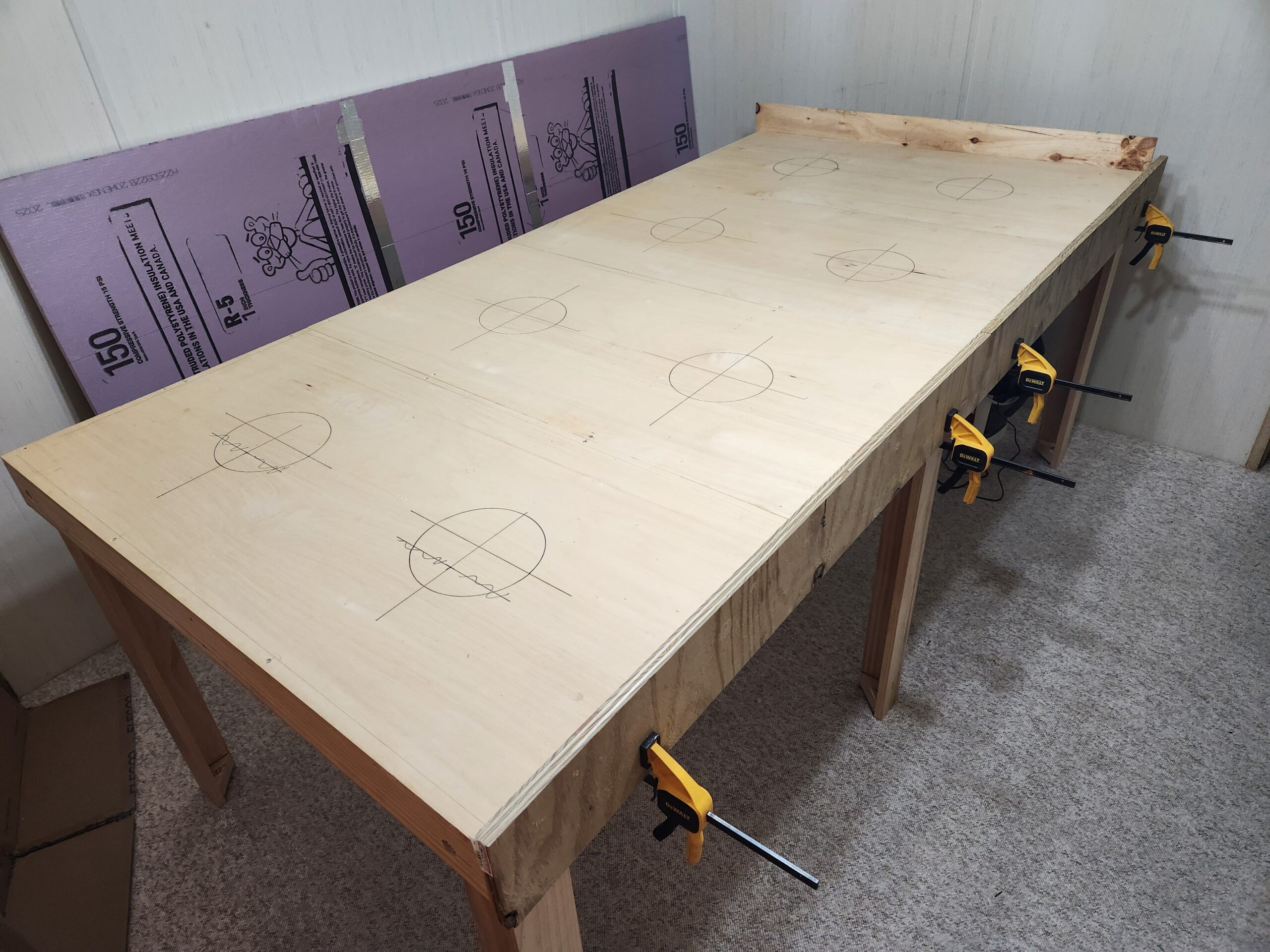
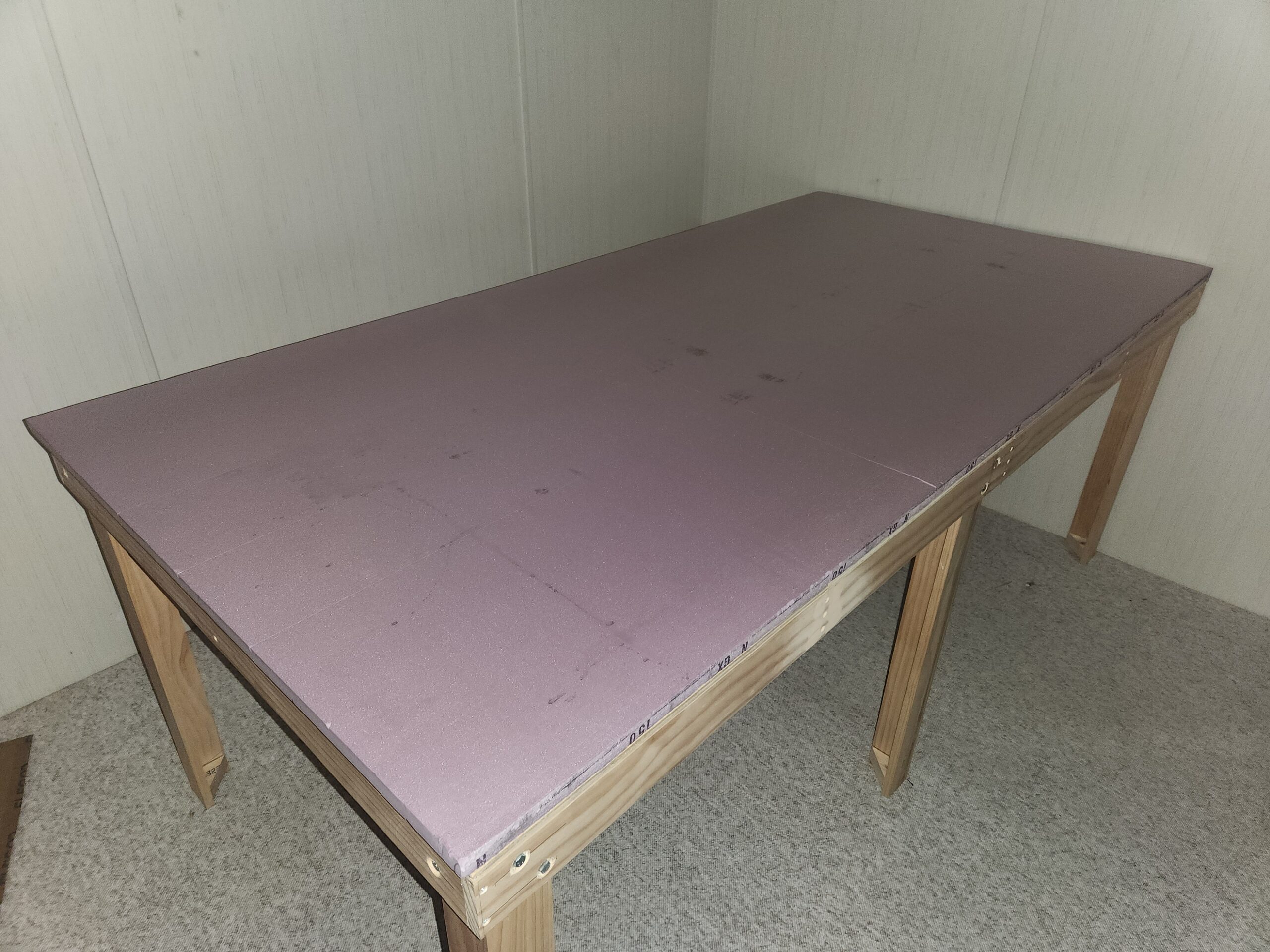
Once I’ve stripped everything back to the bare top, I purchased one 4′ x 8′ x 1″ thick piece of that Pink Panther (Owens-Corning) brand insulating board from the local, Big Orange Box store.
You might have noticed that there is some tape on the foam board. I needed to cut the board down to fit in my car for transport. Oops!
BTW-If you find yourself in a similar situation, the cheap aluminum duct sealing tape from that same store is GREAT, and cheap!
Unexpectedly, I cut the board down in such a way, that the resulting seams of the top and the board, DO NOT line up. I’ll consider that a win!
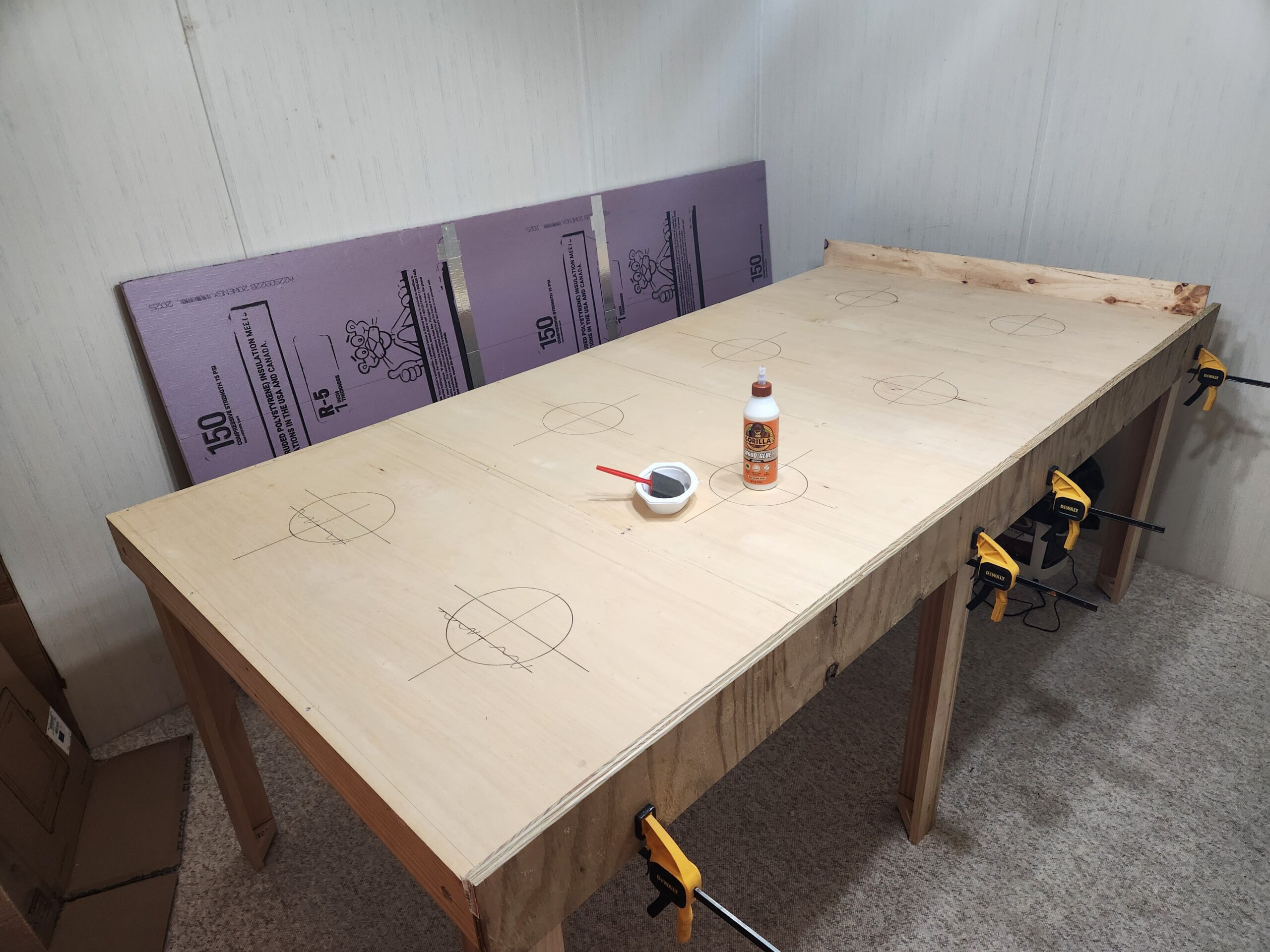
Here I’m getting ready to glue the foam board to the bench top. I’ll be using Gorilla brand, original, non-foaming wood glue using a wide, foam brush to spread it.
You can see that I’ve clamped some thin, ¼” plywood to the far end, as well as the closest side of the top. These boards will help keep the foam board aligned with those two surfaces of the top while the glue dries.
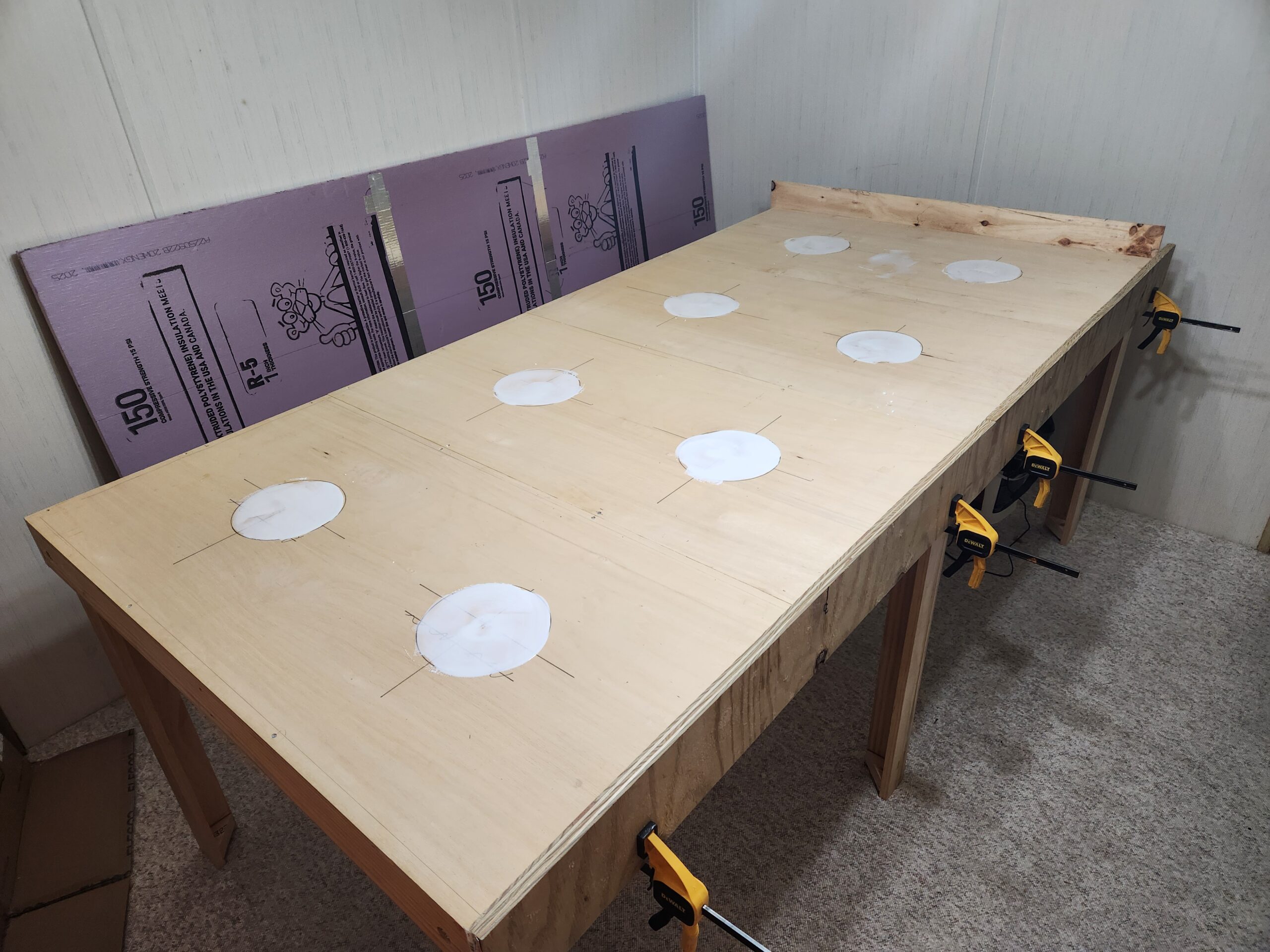
The glue has been spread and is ready for the foam board.
I didn’t see any need to over-do it on the glue due to the fact that the weight of all the track, scenery, vehicles, etc. will hold it down, eventually. These eight, 8″ glue dots should do the trick.
For now, the glue’s only purpose is to keep the foam board from sliding around as I continue building the rest of the layout.
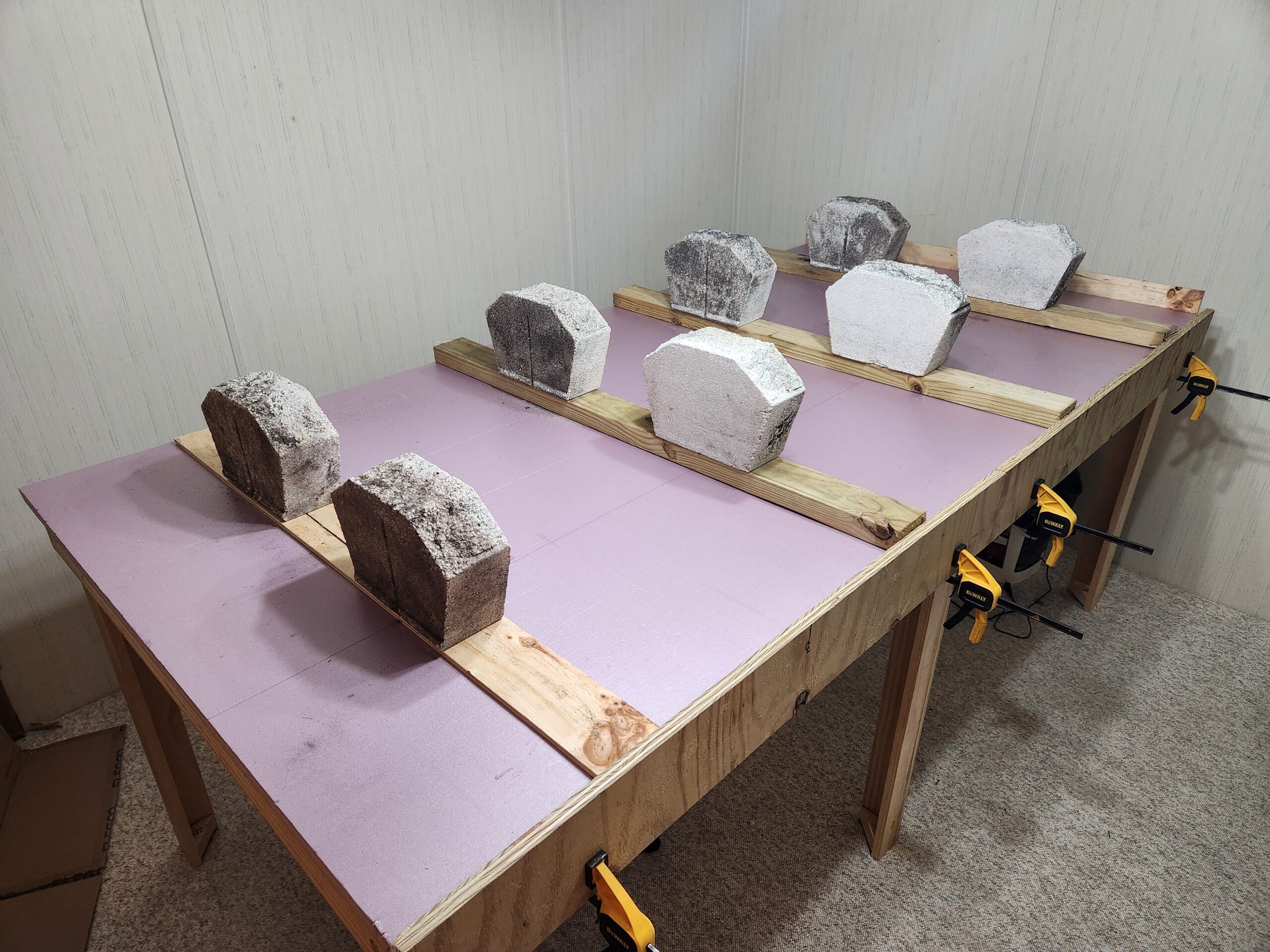
The board is down and pushed up against the end and side alignment boards. Weights have been added to aid in holding everything down until the glue cures. I put the weights on top of some scrap wood to help spread the load and to help protect the foam. I plan on waiting for a couple of days to be certain that the glue has dried.
I hope the gardener doesn’t notice anything “amiss” in the yard… 😗♪♫
TA-DA! Success!
It’s been a little over forty-eight hours, and it appears that everything has gone according to plan.
Now I can trim the far side and the near end of the foam board, due to it being a bit oversized. I’ll use a brand new, never been used razor knife to make the cuts (multiple passes at increasingly deeper settings), using the 2″ x 4″ tabletop edges as a guide.