After much debate with myself, which led to many arguments, some rather physical (I’ve lost some teeth and suffered a black eye), I’ve finally decided to go ahead with my plans to build a model railroad. I guess I won the argument(s).
First things first, I need a table, or as we in the hobby refer to it, a bench or bench work. Mine will be a simple four-foot by eight-foot bench. Something sturdy but not over-engineered. Yeah, right!
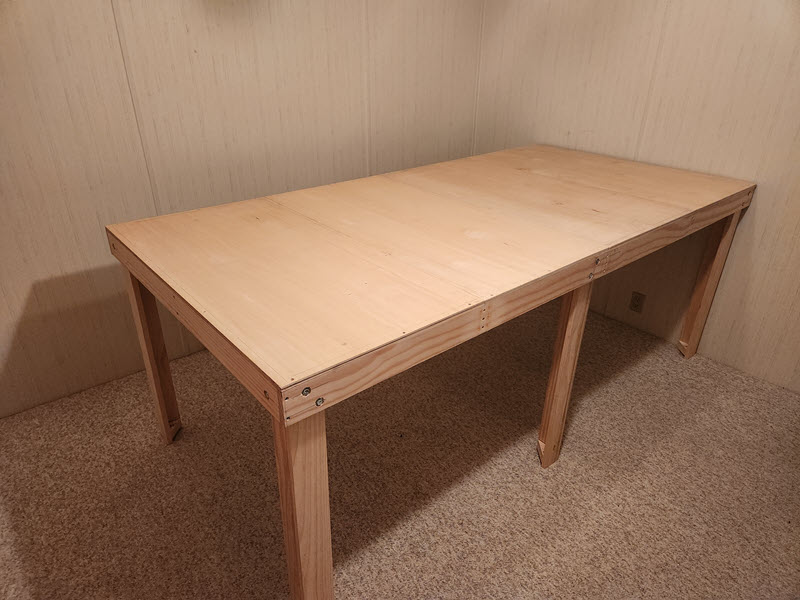
Here’s the completed bench. 2″ x 4″ top framework, ½” thick plywood top, and 1″ x 4″ leg assemblies.
The frame perimeter and cross pieces were assembled using #10 x 1¼” long screws. The top was nailed in place using x1½” long brads and an air nailer.
So much for not over-engineering it!
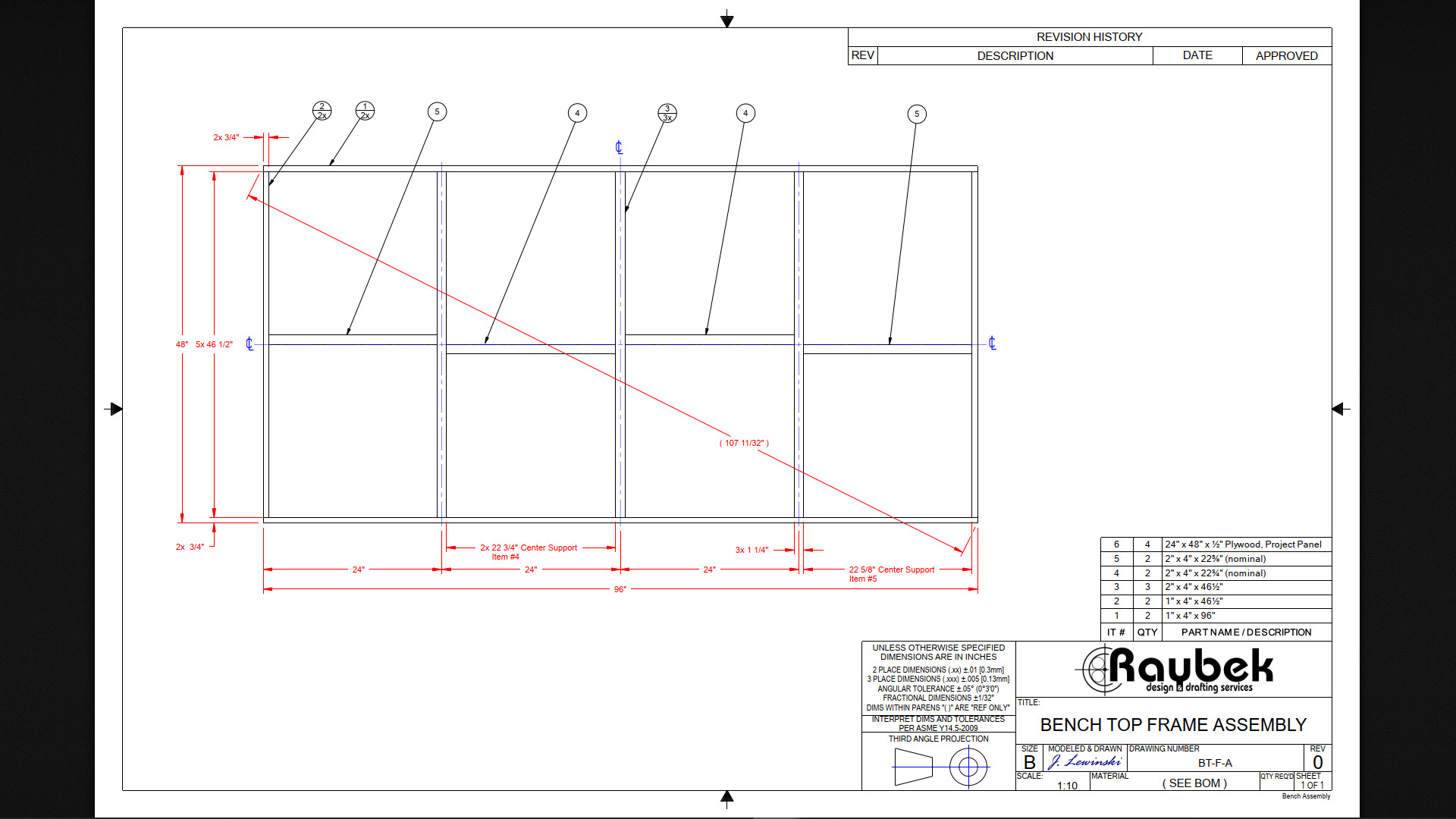
I’ve created engineering drawings of the bench, as shown in the image above. The drawing to the right shows the basic framework.
The legs were attached to the frame rails using 2″ long 3/8-16 UNC hex head bolts with flat washers under the head and a flat washer/lock washer/nut stack on the threaded end of the bolt (obviously).
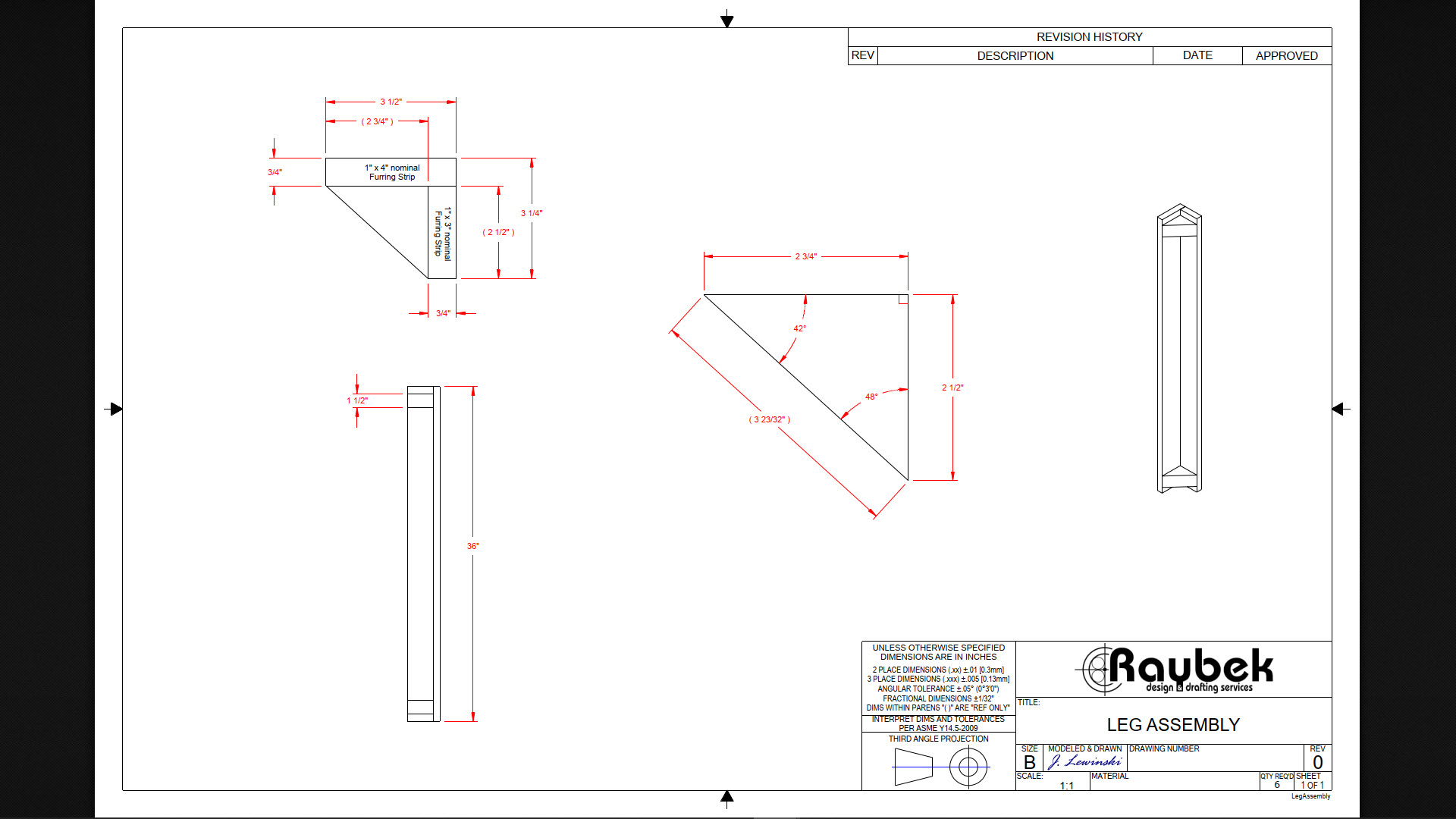
This is the drawing for the leg assembly. Six legs are required for the bench. They are made with 1″ x 2″ furring strips, glued and nailed together to form L-shaped legs. A triangular piece is attached to both the top and bottom portions of the legs. This is for additional strength and to provide leveling pads on the bottom, if needed (I didn’t need).
The boltholes in the bench top frame rails were counterbored so that the heads of the bolts would be below the surface of the frame rails, thereby creating a flat surface for mounting fascia boards at a later date.
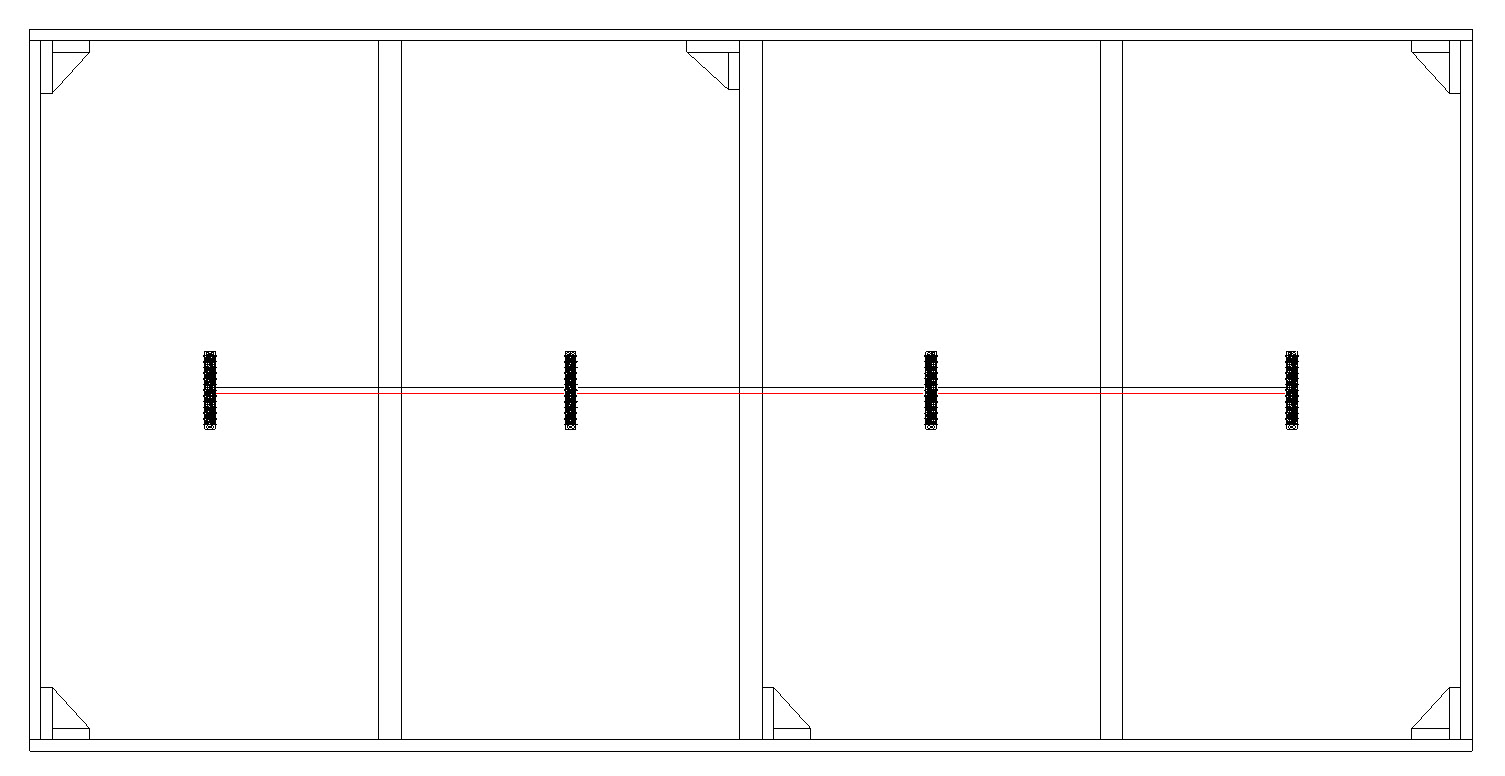
Here’s an image of the main power bus that is mounted to the underside of the tabletop. I’ve decided to save some wire here by running the bus straight down the middle of the table, as opposed to running it around the perimeter, as most people do.
In this way, I’m using only 7′ of heavier gauge wire (which includes the extra 12″ to the end of the table), as opposed to 24′ if run around the perimeter. This should also facilitate neater wiring by limiting all wires to a maximum of ≈24″ (best for limiting any current drop).